
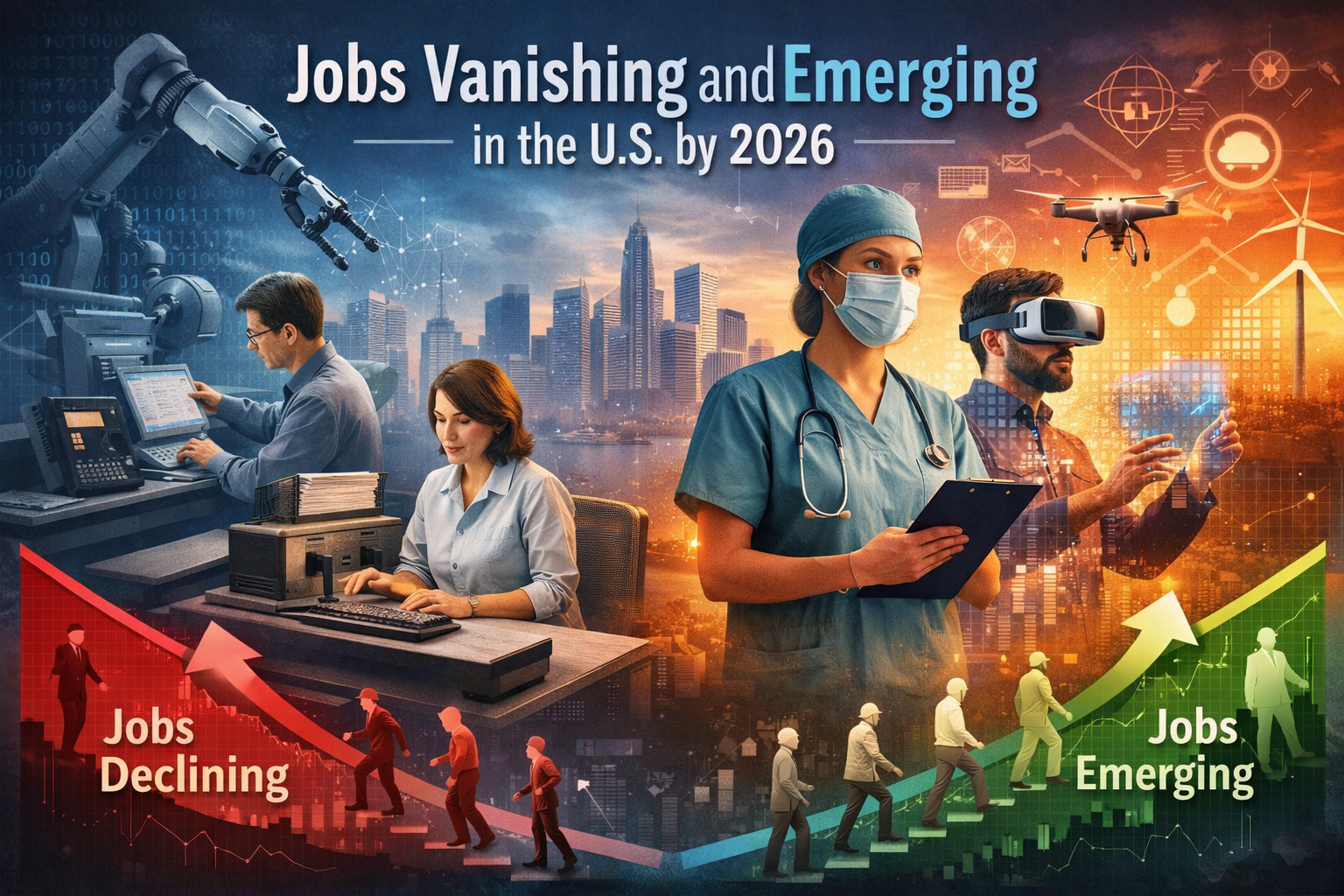
Explore which U.S. jobs 2026 are disappearing due to automation and AI — and which new careers are emerging, reshaping the workforce toward 2026 and beyond.
Introduction
The U.S. labor market is undergoing one of the most rapid transformations in modern history. Technological advances — particularly artificial intelligence, automation, and data technologies — are reshaping how we work and what we work on. While some jobs face gradual decline or elimination, others are emerging as the defining careers of the next decade. Understanding these shifts is crucial for job seekers, employers, policy makers, and educators alike
In this article, we analyze job trends projected through 2026 and beyond, identify roles likely to disappear, highlight those gaining prominence, and offer insights on how professionals can adapt to the evolving world of work.
Why Job Dynamics Are Changing
Several macroeconomic and technological forces are driving job market changes:
- AI and Machine Learning Automation: AI tools can handle routine cognitive tasks and automate complex workflows, reducing demand for repetitive roles but creating demand for AI-related skills.
- Digital Transformation across Industries: Businesses are investing in digital systems to boost productivity, transforming traditional roles and requiring new technical competencies.
- Healthcare & Demographic Shifts: The aging U.S. population accelerates demand for healthcare workers and support services.
- Supply Chain and Logistics Growth: As global trade evolves, logistics and essential services roles remain critical.
Together, these forces imply not all job losses are permanent, but many are job transitions — requiring skills shifts and reskilling.
Jobs Likely to Decline or Disappear
Technological disruption and automation mean certain roles will shrink significantly by 2026:
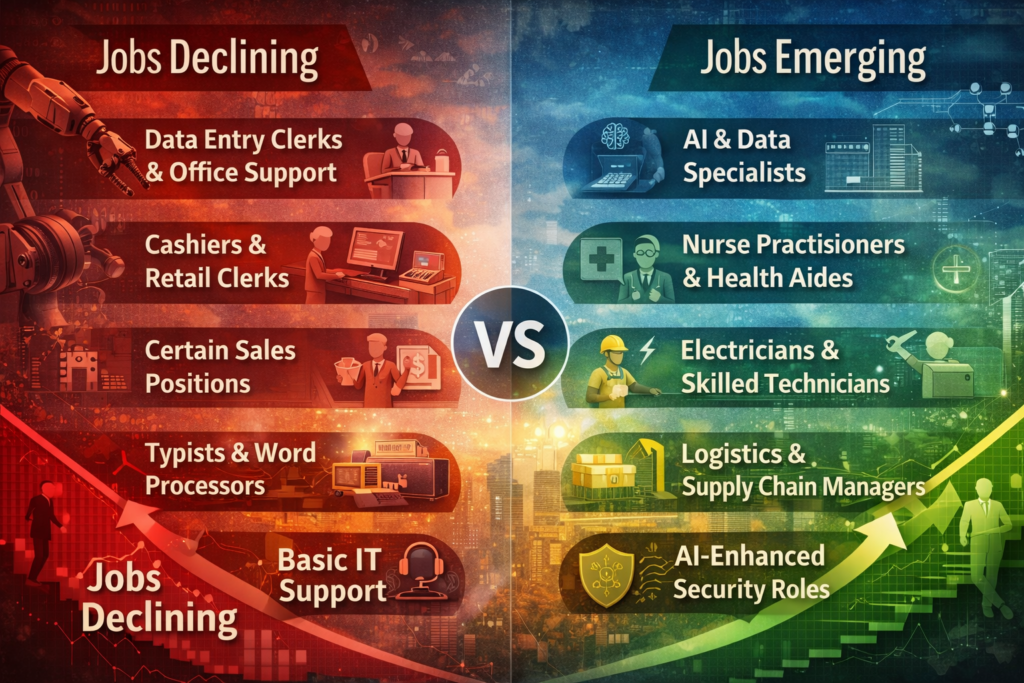
1. Clerical and Entry-Level Office Jobs
- Data entry clerks
- Administrative assistants
- Executive secretaries
These roles are increasingly automated by AI tools that handle routine documentation, scheduling, and data processing.
2. Traditional Typing and Office Support Roles
Positions like word processors and typists continue to decline as advanced text recognition and productivity software improve.
3. Basic IT Support and Front-line Tech Roles
Tier-1 helpdesk and basic web development/HTML work are being disrupted by intelligent DIY platforms and AI support bots.
4. Cashiers and Retail Point-of-Sale Jobs
Automated checkouts and e-commerce growth are reducing traditional retail hiring.
5. Certain Sales and Middle-Management Roles
Roles with repetitive communication or standardized decision processes are increasingly supported or replaced by digital systems and AI tools.
Why These Declines Matter
While some positions shrink gradually, workers in these roles may face layoffs or the need to transition careers. Include an illustrative chart or infographic about job decline statistics.
U.s Jobs 2026 That Will Grow
Despite the disruption, many careers offer strong growth potential as the economy evolves.
1. Healthcare and Medical Support Roles
- Nurse practitioners
- Home health aides
- Medical technicians
Healthcare support continues to be among the fastest-growing employment segments in the U.S.
2. Technology and Data Careers
- Data scientists and data engineers
- AI and machine learning specialists
- Cybersecurity experts
These roles are expanding as companies deploy advanced systems and require professionals who can build, secure, and manage them.
3. Skilled Trades and Infrastructure Jobs
As industries like AI and energy grow, demand for:
- Electricians
- HVAC technicians
- Plumbers
has risen sharply, especially for support of critical infrastructure projects.
4. Logistics, Transportation & Supply Chain Roles
With a renewed emphasis on resilient supply chains, logistics coordinators, warehouse specialists, and transportation managers remain irreplaceable.
5. AI-Enhanced and Novel Roles
Emerging job categories include:
- AI Workflow Designers
- AI Agent Managers
- Offensive AI security specialists
These professions arise as businesses deploy AI at scale.
Skills You Need for the Future Workforce
Given these shifts, today’s workers must prioritize:
- AI literacy
- Critical thinking & problem solving
- Digital communication
- Leadership and management skills
- Specialized trade expertise
What Employers Should Know
Employers need forward-looking hiring strategies:
- Invest in reskilling programs
- Blend human skills with digital automation
- Foster flexible career paths
- Prioritize employee retention through growth opportunities
Conclusion
The U.S. job market by 2026 will be defined by transformation, not disappearance. While some roles decline, countless new opportunities emerge — especially for those ready to adapt. With the right strategies, workers and companies can thrive amid change.