

Learn how to build a successful U.S. career from anywhere in the world using remote jobs, freelancing, visas, networking, and smart positioning.
Introduction
The idea of building a career in the United States has long been associated with physically moving there. Silicon Valley, Wall Street, Hollywood, and top universities have historically drawn global talent to U.S. soil. But the world of work has changed—dramatically.
Today, you can build a real, scalable, and prestigious U.S. career without living in the United States. Thanks to remote work, global hiring, freelancing platforms, digital entrepreneurship, and cross-border collaboration tools, geography is no longer the gatekeeper it once was.
This article is a complete, practical guide for professionals, freelancers, entrepreneurs, and students who want access to the U.S. job market, income levels, and career growth—while staying in their home country.
You’ll learn:
- What a “U.S. career” really means today
- The best paths to enter the U.S. job market remotely
- Skills and profiles U.S. employers actively hire abroad
- Legal, tax, and payment considerations
- How to position yourself as a top international candidate
What Does “Building a U.S. Career” Actually Mean?
Before going further, let’s clarify the concept.
Building a U.S. career does not necessarily mean:
- Living in the United States
- Having a U.S. passport or green card
- Working U.S. office hours forever
It does mean:
- Working with U.S.-based companies, clients, or teams
- Earning income aligned with U.S. market rates
- Gaining experience recognized by U.S. employers
- Growing a professional network centered in the U.S.
Many professionals today work for U.S. companies from Africa, Europe, Asia, or Latin America—sometimes earning more than local executives.
Why U.S. Companies Hire International Talent
U.S. employers are increasingly open to hiring globally for several reasons:
1. Talent Shortages
There are not enough qualified professionals in areas like:
- Software engineering
- Data science
- Cybersecurity
- Digital marketing
- Product management
- UX/UI design
2. Cost Efficiency
Hiring internationally allows companies to:
- Reduce overhead
- Scale faster
- Pay competitive (but fair) global salaries
3. Remote-First Culture
After COVID-19, remote work became normalized. Many U.S. companies are now:
- Fully remote
- Remote-first
- Asynchronous by design

The Main Paths to a U.S. Career Without Relocation
There is no single route. The right path depends on your skills, experience, and goals.
1. Remote Employment with a U.S. Company
This is the most direct option.
You are:
- Employed full-time or part-time
- Working remotely from your country
- Paid in USD (often via international payroll tools)
Common Job Titles
- Software Engineer
- Customer Success Manager
- Sales Development Representative (SDR)
- Digital Marketer
- Content Strategist
- QA Engineer
Where to Find These Jobs
2. Freelancing for U.S. Clients
Freelancing is often the fastest entry point.
You:
- Work project-based or hourly
- Choose your clients
- Scale into an agency or consultancy
High-Demand Freelance Skills
- Web & mobile development
- Graphic & brand design
- SEO & paid advertising
- Copywriting & content marketing
- Video editing
- Automation & no-code tools
Platforms to Start
Pro tip: Many freelancers later convert U.S. clients into long-term contracts or full-time roles.

3. Building a U.S.-Facing Online Business
You don’t need a U.S. employer if you become the business.
Examples:
- SaaS products
- E-commerce brands
- Online education
- Coaching & consulting
- Media brands
You can:
- Register a U.S. LLC remotely
- Use Stripe & PayPal
- Sell directly to U.S. customers
This path offers:
- Full independence
- High income potential
- Strong U.S. market exposure
4. Contracting via Employer of Record (EOR)
Some U.S. companies use intermediaries like:
- Deel
- Remote.com
- Oyster
These platforms:
- Handle contracts & compliance
- Pay local taxes when required
- Make international hiring easy
You work for a U.S. company, legally employed in your country.
Skills That Open Doors to the U.S. Market
Skills matter more than degrees or location.
Tech & Data
- Full-stack development
- Cloud computing
- AI & machine learning
- Data analytics
Business & Marketing
- Performance marketing
- B2B sales
- Product marketing
- Growth strategy
Creative & Communication
- UX/UI design
- Copywriting
- Video production
- Technical writing
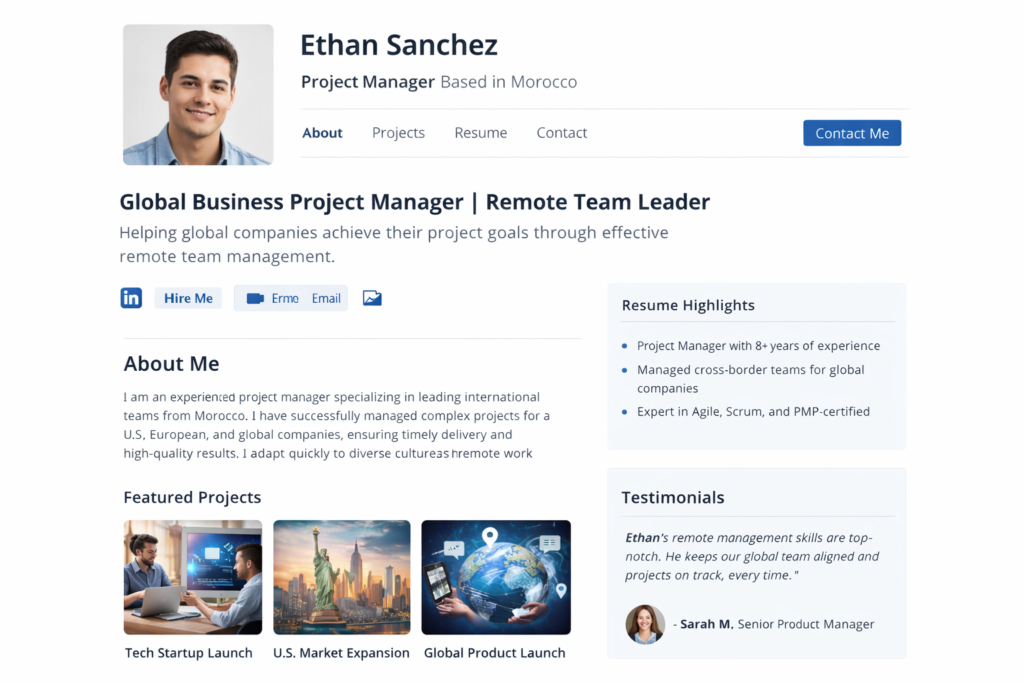
How to Build a U.S.-Ready Profile
Your profile must speak the U.S. professional language.
1. Resume (CV)
- One page preferred
- Results-focused
- Metrics and impact
2. LinkedIn Optimization
- Headline with value proposition
- Experience written for U.S. recruiters
- Recommendations from clients/managers
3. Portfolio or Case Studies
Show:
- Real projects
- Business impact
- Clear problem–solution structure
Networking Without Being in the U.S.
Networking is still critical—but it’s digital now.
Effective Channels
- LinkedIn DMs
- Twitter/X professional communities
- Slack & Discord groups
- Virtual conferences
Smart Outreach Tips
- Personalize messages
- Focus on value, not asking
- Be concise and respectful
Legal, Tax, and Payment Considerations
You don’t need a U.S. visa to work remotely.
However, you must manage:
- Local taxes in your country
- Invoicing or contracts
- Payment methods
Common Tools
- Wise
- Payoneer
- Deel
Always consult a local accountant to stay compliant.
Common Myths (And the Truth)
Myth: You need to live in the U.S. Truth: Many U.S. teams are fully distributed.
Myth: Only tech people succeed. Truth: Marketing, sales, and creatives are in demand.
Myth: Accent or nationality is a barrier. Truth: Results and communication matter more.
Challenges You Should Expect
- Time zone differences
- Cultural communication gaps
- Higher competition
These are manageable with:
- Clear boundaries
- Strong async communication
- Consistent upskilling
Long-Term Growth Strategy
Once inside the U.S. ecosystem, you can:
- Increase your rates
- Move into leadership roles
- Launch your own ventures
- Eventually relocate (if you choose)
A U.S. career is not a destination—it’s a platform.
Conclusion
Building a U.S. career without living in the United States is no longer an exception—it’s a global trend.
With the right skills, positioning, and strategy, you can access world-class opportunities, income, and growth from anywhere in the world.
Start small. Think global. Act professional.
The U.S. market is open—if you know how to enter it.