
Learn how AI-Powered ATS systems actually work in 2026, technology screens resumes, ranks candidates, and changes the best resume optimization strategies.Most job seekers learned ATS optimization years ago.
The advice was simple: match keywords, use standard headings, and avoid complicated formatting.
That advice still matters.
Yet modern systems can do much more than search for exact terms.
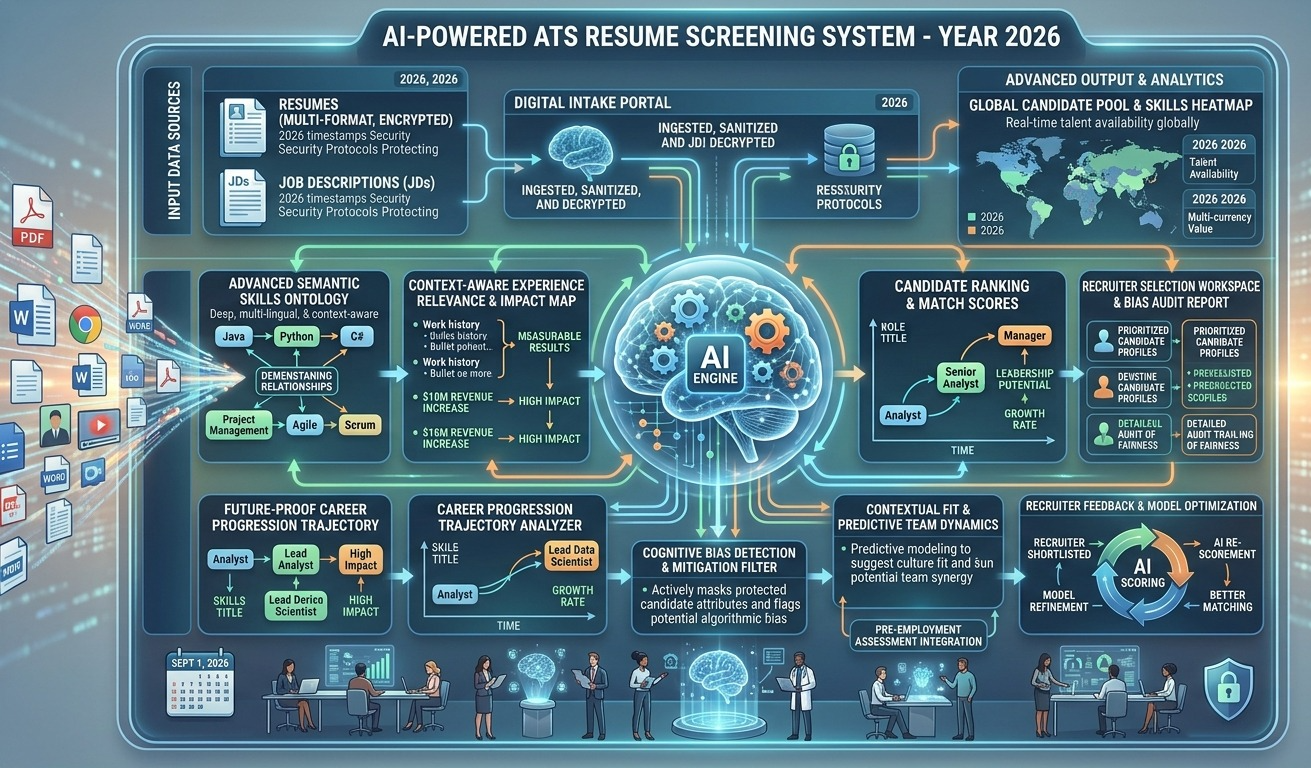
In 2026, AI-powered applicant tracking systems can help employers analyze, rank, and prioritize candidates.
They can evaluate skills in context instead of treating keywords as isolated matches.
They can also identify relationships between experience, responsibilities, skills, and job requirements.
That changes how you should approach resume optimization.
The goal is no longer to fill your resume with matching words.
Your goal is to present relevant experience clearly and naturally.
This guide explains what changed, what still works, and how to optimize your resume for AI screening.
If you need the fundamentals first, review the ATS-friendly resume basics.
This article builds on those fundamentals with a deeper look at AI-driven screening.
What Changed: Old ATS vs How AI-Powered ATS Systems actually work in 2026
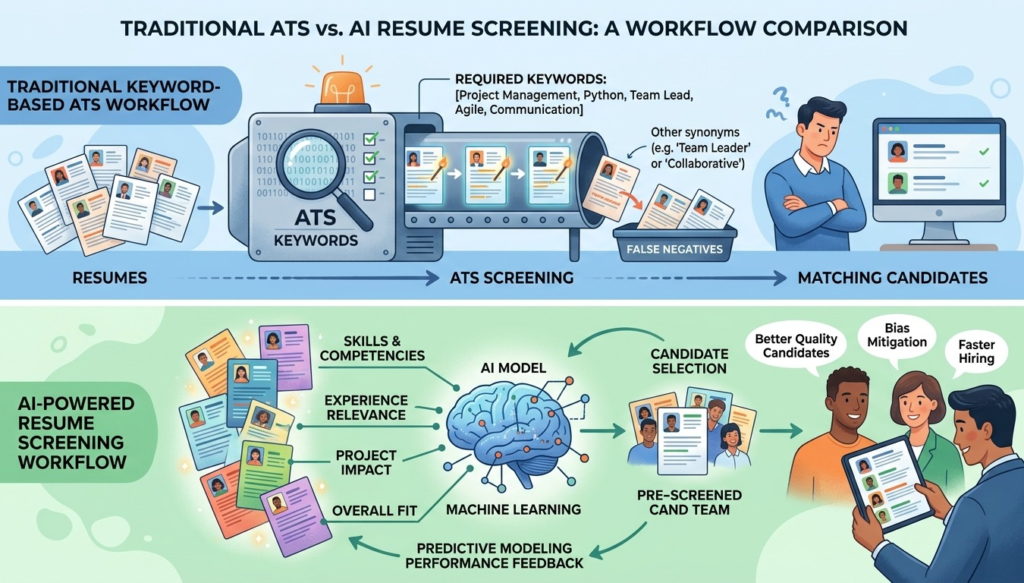
Traditional ATS platforms primarily helped recruiters organize applications.
They stored resumes, tracked candidates, and supported keyword searches.
Recruiters could search for terms such as “Python,” “project management,” or “Salesforce.”
A resume containing those terms had a better chance of appearing in searches.
Modern AI systems can support a broader evaluation process.
They may analyze how skills relate to experience and job requirements.
They can also help rank candidates based on perceived relevance.
The important distinction is context.
Consider a software engineering job requiring Python development.
One resume might list “Python” in a skills section.
Another might explain how the candidate used Python to automate data workflows.
The second example provides substantially more context.
AI resume screening can use that context when assessing relevance.
The exact process varies between platforms and employers.
No universal AI ATS scoring formula exists across the entire hiring market.
Employers also configure recruiting systems differently.
Still, several industry patterns have become increasingly important.
From Keyword Matching to Candidate Relevance
Older systems often depended heavily on searchable terms.
Modern systems can examine related concepts and surrounding language.
For example, “customer acquisition” may connect with relevant marketing responsibilities.
Similarly, “financial forecasting” can relate to budgeting and financial planning.
That does not mean every ATS understands every synonym perfectly.
Clear language remains essential.
The practical lesson is straightforward.
Use the terminology employers actually use.
Then explain those skills through specific accomplishments and responsibilities.
From Storage to Ranking
An ATS traditionally functioned like a candidate database.
Modern AI features can support candidate ranking and prioritization.
Recruiters may receive recommendations based on job requirements and candidate information.
The system can help reduce manual review.
That means getting into the applicant pool is only part of the challenge.
Your resume must also communicate strong relevance.
From Screening to Workflow Automation
Recruiting technology increasingly connects resume screening with broader hiring workflows.
Systems can help recruiters identify candidates, organize applications, and automate administrative tasks.
Some employers also use automated assessments or interview technologies.
AI ATS 2026 strategies should therefore focus on relevance, clarity, and evidence.
Keyword placement alone is no longer enough.
What AI-Powered ATS Actually Evaluates Now
Understanding how does ATS work in 2026 requires looking beyond keyword matching.
AI-powered screening can evaluate several signals simultaneously.
The exact signals and weighting depend on the technology and employer configuration.
1. Skills Relevance
Your resume should demonstrate the skills required for the target position.
A skills list helps, but context makes those skills stronger.
Show where you used each important capability.
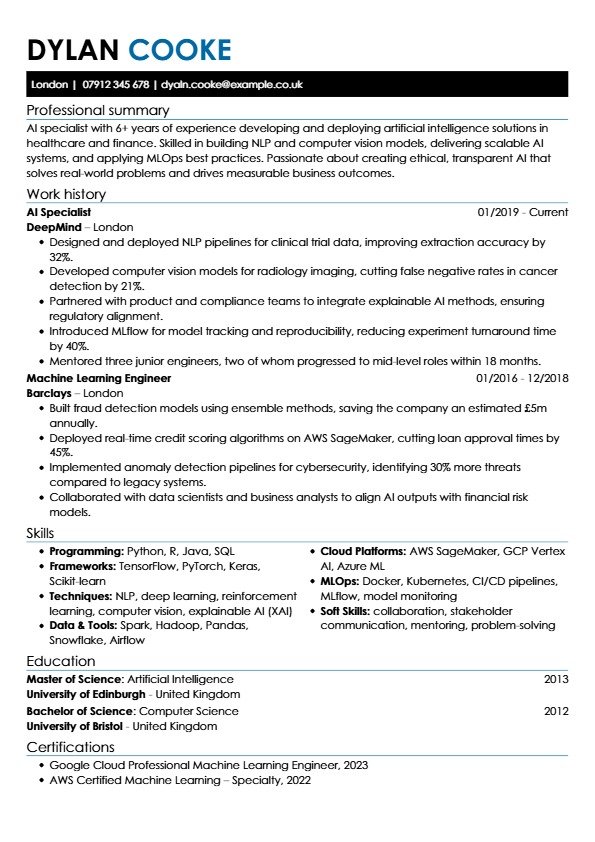
For example, write “Built automated Python reporting workflows” instead of simply “Python.”
That statement provides skill, action, and application.
2. Context Around Keywords
AI resume screening can examine words within surrounding content.
Therefore, keyword stuffing creates little value.
A recruiter needs evidence that you actually used the skill.
Your resume should connect technologies, responsibilities, and outcomes.
Use natural phrasing throughout your experience section.
3. Career Progression
Your career history can provide useful context.
Promotions, increasing responsibilities, leadership roles, and larger projects show progression.
AI systems may identify these relationships when analyzing candidate information.
Make progression easy to understand.
Use accurate job titles and clear employment dates.
Explain expanded responsibilities when your role changed substantially.
4. Experience Relevance
Recent experience usually deserves the strongest emphasis.
Older positions can still matter when they directly support your target role.
Tailor the amount of detail accordingly.
You do not need equal space for every job.
Give more room to experience that demonstrates current qualifications.
5. Accomplishments
Strong resumes show what changed because of your work.
Metrics can make accomplishments easier to understand.
For example, “Reduced processing time by 30%” communicates more than “Improved processes.”
Use numbers when they are accurate and defensible.
Avoid manufacturing results simply to make bullets sound impressive.
6. Job Description Alignment
The job description remains one of your most useful optimization resources.
Look for repeated skills, responsibilities, tools, and qualifications.
Then reflect relevant terminology in your resume.
Only include requirements you genuinely meet.
Misrepresenting experience can create problems later.
7. Semantic Relationships
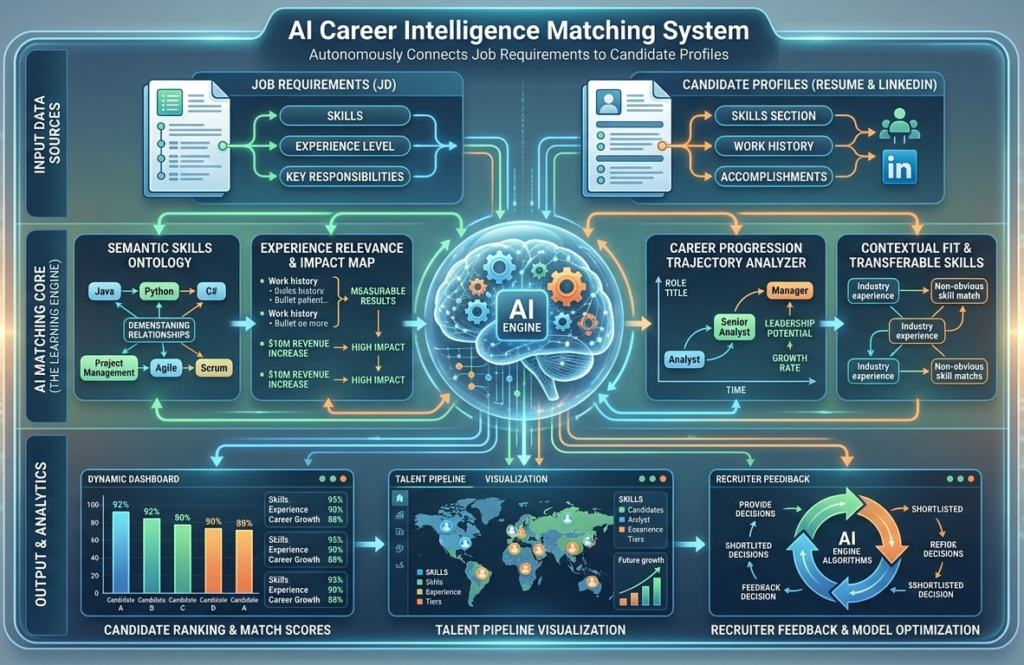
AI systems can potentially identify relationships between related terms.
For example, “stakeholder management” may appear alongside project leadership responsibilities.
“SQL” might appear within database reporting or analytics work.
These relationships create useful context.
Still, do not rely on an algorithm to infer everything.
Write important qualifications explicitly.
Old Resume Tricks That No Longer Work
Some ATS advice became popular because older systems had predictable limitations.
Modern AI screening makes several shortcuts less useful.
Keyword Stuffing
Repeating a keyword dozens of times does not create genuine qualification.
It can make your resume difficult to read.
It can also create suspicious or unnatural language.
Instead, mention important skills where they genuinely belong.
Use the summary, skills section, experience bullets, and project descriptions appropriately.
White Text and Hidden Keywords
Hidden keywords were designed to manipulate keyword searches.
They provide no legitimate evidence of your abilities.
Modern processing can also extract text without relying on visual presentation.
More importantly, deceptive tactics create unnecessary risk.
Never hide keywords in white text or tiny fonts.
Generic Buzzwords
Words such as “dynamic,” “results-driven,” and “team player” appear frequently.
They rarely demonstrate a specific qualification by themselves.
Replace vague claims with evidence.
Instead of saying “excellent leader,” describe the team, project, and result.
Keyword Lists Without Evidence
A long technology list can look impressive.
However, it does not show proficiency.
Connect important tools to real responsibilities.
That approach also gives recruiters useful context after screening.
Copying the Job Description
Copying entire phrases from a job posting creates unnatural content.
Tailoring means translating relevant requirements into your own experience.
Do not turn your resume into a duplicate job description.
Focus on authentic alignment.
How to Optimize Your Resume for AI-Powered ATS
The best way to beat AI resume screening is not to manipulate it.
Build a resume that communicates your qualifications clearly.
Follow these practical steps.
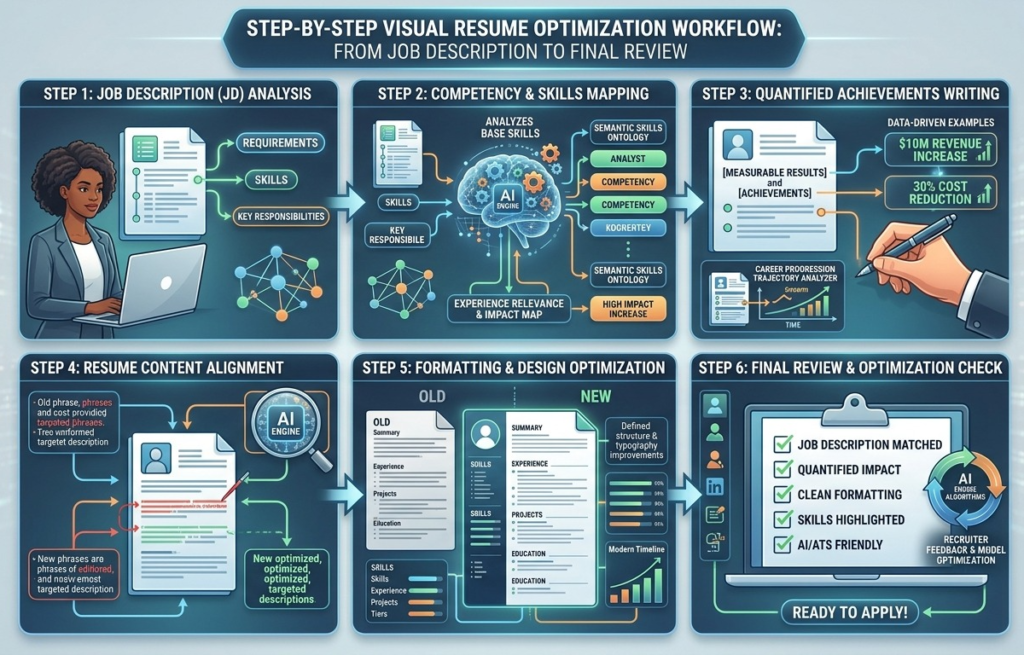
1. Start With the Target Job Description
Read the posting before editing your resume.
Identify required skills, preferred skills, responsibilities, and qualifications.
Separate must-have requirements from optional ones.
Prioritize requirements that repeatedly appear throughout the posting.
2. Mirror Relevant Industry Terminology
Use terminology that accurately describes your experience.
For example, use “customer relationship management” when appropriate.
Include “CRM” if the employer uses that abbreviation too.
This approach improves clarity for both systems and human reviewers.
3. Put Important Skills Into Context
Do not rely on a keyword-only skills section.
Demonstrate important capabilities inside achievement bullets.
For example:
“Managed Salesforce pipeline reporting across a 12-person sales team.”
That bullet establishes both the tool and its business application.
4. Quantify Results Where Possible
Numbers make accomplishments more concrete.
Use percentages, revenue figures, time savings, volume, team size, or other relevant measures.
Choose metrics that accurately represent your contribution.
Do not add numbers merely for appearance.
5. Make Career Progression Obvious
Use consistent dates and clearly separated positions.
Show promotions when they occurred.
Describe expanded responsibilities when relevant.
This structure helps readers understand how your career developed.
6. Keep Formatting Simple
AI ATS 2026 optimization does not eliminate traditional formatting principles.
Use standard section headings.
Avoid unnecessary graphics, complex tables, text boxes, and decorative layouts.
Keep important information in selectable text.
Use a conventional structure that works across different systems.
7. Customize Your Professional Summary
Your summary should quickly establish your target role and strongest qualifications.
Mention relevant experience, specialties, and measurable strengths.
Avoid filling the summary with generic adjectives.
A targeted summary gives screening technology and recruiters useful context immediately.
8. Review the Resume Like a Recruiter
After optimizing for ATS systems, read your resume manually.
Ask whether your strongest qualifications stand out within seconds.
Check whether every major claim has supporting evidence.
Remove repetition and irrelevant information.
The best resume must work for both technology and people.
Mistakes to Avoid With AI-Powered ATS
Use this checklist before submitting your next application.
| ✅ Do | ❌ Don’t |
|---|---|
| Match relevant job terminology | Stuff keywords repeatedly |
| Explain skills through experience | List skills without evidence |
| Quantify accurate achievements | Invent impressive statistics |
| Use standard headings | Hide information in graphics |
| Show career progression | Obscure employment dates |
| Tailor each application | Send one generic resume everywhere |
| Keep formatting readable | Use complex visual layouts |
| Review for human readability | Optimize only for software |
These principles also support broader resume quality.
Review the guide to common resume mistakes before submitting applications.
Get Your Free Resume Template →
Use Get Your Free Resume Template → to build a clean starting point.
Once you get past the resume screen, prepare for AI interviews with these AI interview tips for 2026.
Frequently Asked Questions
1. How does ATS work in 2026?
Modern ATS technology can do more than store applications.
AI features may analyze resume content, identify relevant skills, and support candidate ranking.
The exact process depends on the platform and employer.
No single scoring formula applies to every ATS.
2. Does AI ATS 2026 technology replace keyword optimization?
No.
Keywords still matter because employers search for specific qualifications and terminology.
The difference involves context.
Use relevant keywords naturally while demonstrating how you applied those skills.
3. Can AI resume screening understand synonyms?
Some AI-powered systems can identify relationships between related terms.
However, you should not assume perfect interpretation.
Use the terminology found in the job description when it accurately describes your experience.
Then include relevant abbreviations or closely related terms when appropriate.
4. Can keyword stuffing help me beat AI resume screening?
No.
Keyword stuffing creates unnatural writing without proving competence.
A stronger approach connects important keywords with responsibilities and measurable achievements.
Authentic relevance gives your resume greater value.
5. Should I use an AI-written resume?
AI can help you brainstorm, edit, and tailor resume content.
You remain responsible for accuracy.
Review every claim, metric, job title, date, and skill before submitting.
Your final resume should sound natural and reflect your actual career.
Final Takeaway: Optimize for Relevance, Not Algorithms
The biggest change in AI ATS 2026 technology is the move beyond simple keyword matching.
Modern systems can evaluate resumes using broader signals.
Those signals can include skills, context, experience, responsibilities, and career progression.
That does not mean you should chase an invisible algorithm.
You should create a resume that clearly proves your fit.
Start with the job description.
Identify the qualifications that matter most.
Then connect those qualifications to real experience and measurable outcomes.
Keep your formatting clean and your language natural.
Avoid shortcuts such as hidden text, keyword stuffing, and empty buzzwords.
The strongest strategy remains simple.
Make your qualifications easy to identify, understand, and verify.
That approach helps your resume survive automated screening while remaining persuasive to recruiters.
AI will continue changing recruitment technology.
Your resume strategy should evolve with it.
Focus less on gaming the system and more on communicating genuine professional value.