
Discover the key trends and shifts in the U.S. Job Market for 2026, focusing on technology and economic growth.
Overall Employment Outlook for 2026
The U.S. labor market is transitioning into what many experts call a “low-hire, low-fire” phase — meaning hiring rates are subdued, layoffs are not widespread, and employers are cautious about expanding their workforce. Job creation remains positive overall, but slower than in previous years, reflecting both economic caution and structural shifts in demand.
Economic forecasts predict moderate GDP growth for 2026, with unemployment expected to remain around 4.5% or slightly higher — a mild increase compared to recent years. This suggests that the market will neither overheat with job growth nor collapse into recession-level unemployment. Axios
Why this matters: For job seekers and employers alike, this stability means opportunities persist, but competition is tougher and skill requirements are rising.
Key Drivers Shaping the Future of Employment
Artificial Intelligence (AI) and Automation
AI continues to reshape the workplace. While automation may eliminate some routine tasks, it also creates demand for AI-related roles and tech-centric careers. Employers increasingly prioritize technical and analytical skills, especially in healthcare tech, data analytics, and machine learning.
At the same time, sectors less susceptible to automation — like construction and skilled trades — are experiencing significant labor shortages, driving higher wages and robust hiring.
Insight: Workers who train in AI, digital tools, or hands-on trade skills will be best positioned for success in 2026 and beyond.
Skills-Based Hiring over Degrees
Many employers are shifting hiring practices away from traditional degree requirements toward skills-based evaluations. This trend is especially strong in tech and professional services.
Addison Group
Top in-demand skills include:
✔ AI and machine learning literacy
✔ Digital marketing and cybersecurity
✔ Critical thinking and adaptability
✔ Complex problem-solving
✔ Emotional intelligence and communication skills
WorkinVirtual
Sectors Leading Job Growth in 2026
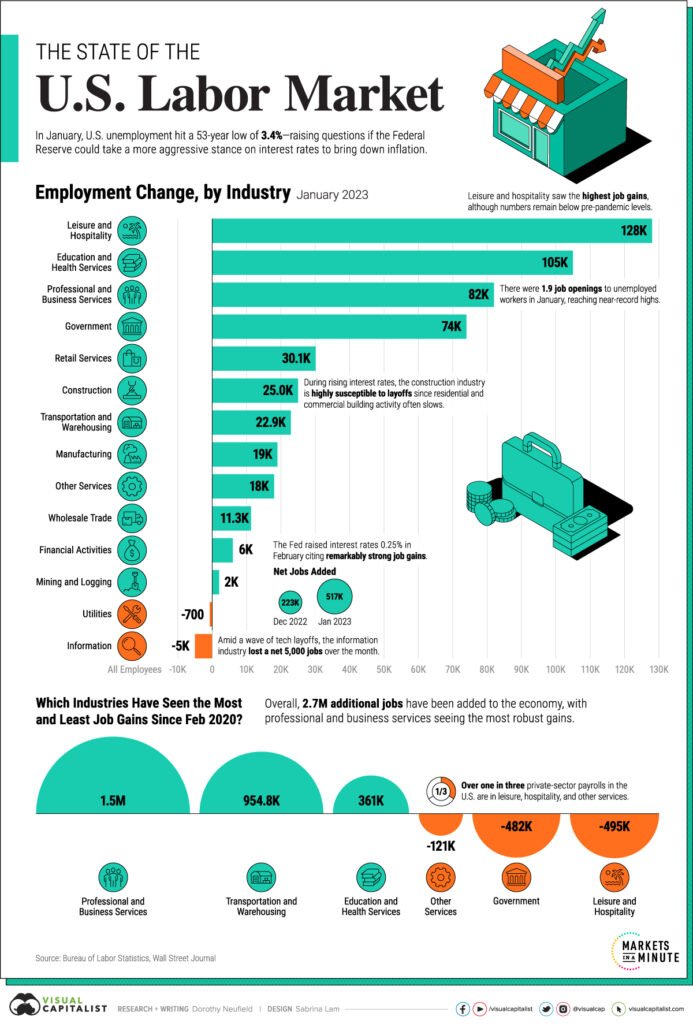
Some industries are expected to outperform others as employment engines:
📈 Healthcare & Social Assistance
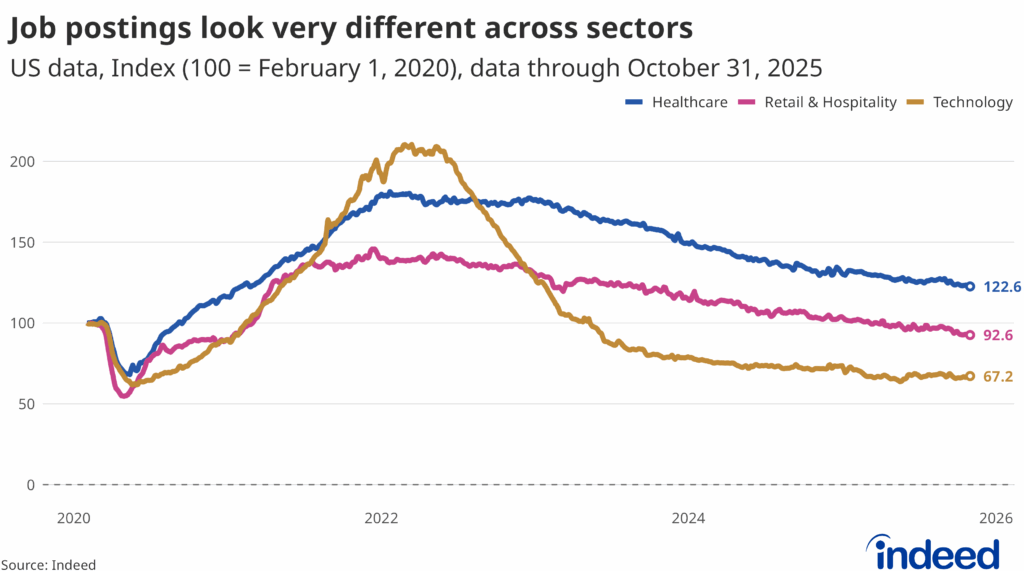
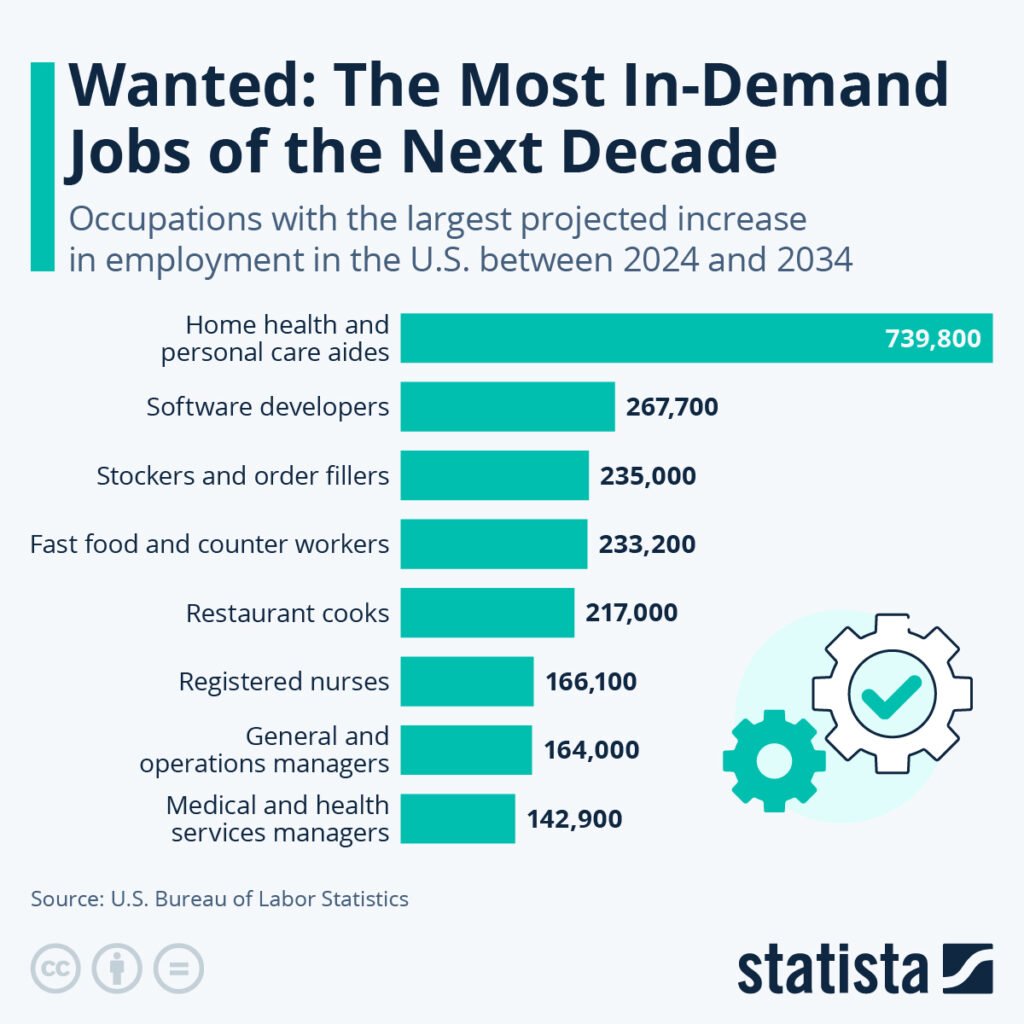
This sector remains one of the largest employers in the U.S. and continues to grow due to aging demographics and expanding care needs.
📊 Technology & Professional Services
Demand for tech talent — from AI engineers to cybersecurity analysts — remains strong, despite slower hiring overall.
🌱 Green Energy and Clean Tech
Jobs associated with clean energy and grid modernization are expanding as renewable infrastructure gains investment.
📦 Construction and Skilled Trades
Significant labor shortages are pushing employers to recruit aggressively, and wage gains in this sector are attracting new talent.
These sector trends show where job seekers may find the best opportunities in 2026.
Challenges Facing the U.S. Job Market
Slower Hiring and Economic Uncertainty
Many companies plan to limit hiring in 2026, opting instead to invest in AI and automation tools or focus on productivity improvements over workforce growth.
Wage Growth Moderation
Average wage increases are expected to be modest, with most sectors planning smaller raises as competition for talent ebbs and flows.
Skill Gaps and Mismatches
Even when jobs are available, there may be a mismatch between employer expectations and worker skills — making continuous learning and upskilling critical.
Tips for Job Seekers and Employers in 2026
For Job Seekers:
✔ Invest in high-value skills like AI, data analysis, and project management.
✔ Build a portfolio of projects and certifications.
✔ Focus on sectors with strong growth prospects (healthcare, tech, green energy).
For Employers:
✔ Adopt flexible, skills-based hiring practices.
✔ Emphasize employee training and career development pathways.
✔ Leverage remote work and hybrid models to widen access to talent.
To maximize your opportunities and gain a deeper advantage, you can check out this e-book. It will provide expert guidance on applying for jobs with a professional resume that is ATS-friendly (Applicant Tracking Systems). It also includes customizable resume templates and cover letters—simply edit them with your information and apply for your dream job!
The U.S. job market in 2026 will likely be defined by steady but modest growth, driven by technological innovation and structural labor shifts. While some sectors face slower expansion, others — particularly healthcare, tech, and skilled trades — are poised for strong employment demand. Success in this evolving landscape requires adaptability, strategic upskilling, and a focus on the skills that matter most in a digital economy.
Final thought: The future of employment isn’t just about job numbers — it’s about how individuals and organizations adapt to change. With the right skills and flexibility, 2026 can be a year of meaningful opportunity despite uncertainty.