
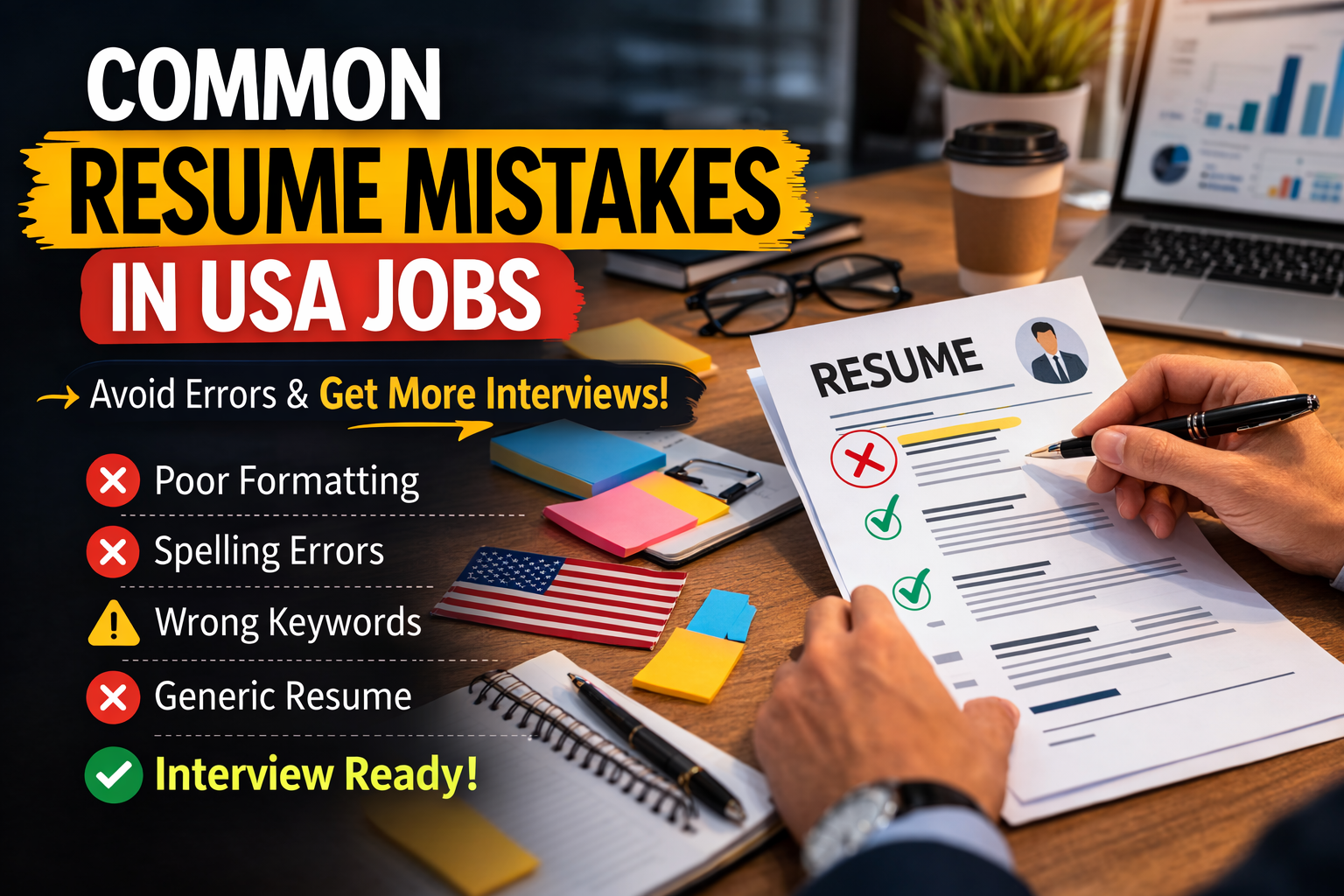
Discover the most common resume mistakes in USA jobs and learn how to avoid them to improve your chances of getting interviews.
Introduction
In the competitive job market of the United States, your resume plays a critical role in determining whether you will receive an interview invitation or be overlooked. Recruiters and hiring managers often review hundreds of resumes for a single job opening. Because of this high volume, they typically spend only a few seconds scanning each resume before deciding whether to move forward with a candidate.
Many qualified job seekers fail to secure interviews simply because of avoidable resume mistakes. These errors can range from poor formatting and spelling mistakes to failing to tailor the resume for specific positions. Even small issues can create a negative impression and cause your application to be rejected.
This article explores the most common resume mistakes in USA jobs, explains why they matter, and provides practical strategies to fix them. By understanding these mistakes and learning how to avoid them, job seekers can significantly increase their chances of standing out in a competitive hiring environment.
Why Resumes Matter in the U.S. Hiring Process
Before exploring the most common mistakes, it is important to understand how the hiring process works in the United States.
Most companies follow a structured recruitment process that includes:
Resume screening
Applicant Tracking System (ATS) filtering
Recruiter evaluation
Interview selection
Many organizations rely on automated systems to scan resumes for keywords before a recruiter ever sees them. If your resume does not meet the required formatting or keyword standards, it may be automatically rejected.
Because of this process, a well-written resume is essential for success in the American job market.
1. Using the Same Resume for Every Job
One of the most common mistakes job seekers make is sending the same resume to multiple employers without making any adjustments.
Why This Is a Problem
Each job description includes specific requirements, responsibilities, and keywords. A generic resume may not match those requirements closely enough to pass ATS screening.
How to Fix It
Instead of using a single resume, create a base version and customize it for each application. Focus on highlighting the skills and experiences that are most relevant to the specific job.
This simple step can dramatically increase your chances of getting noticed by recruiters.
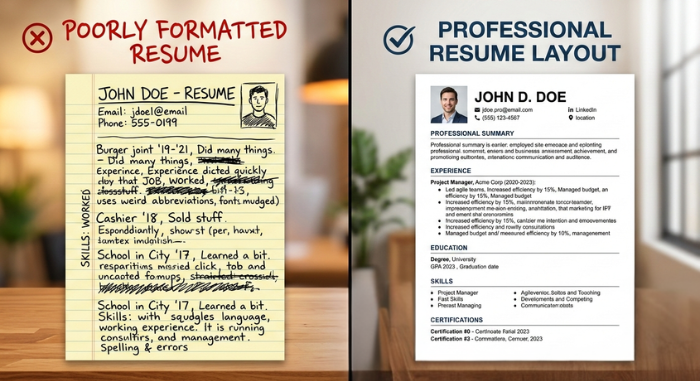
2. Poor Resume Formatting
A resume that is difficult to read will almost always be rejected quickly.
Common Formatting Mistakes
Using multiple font styles
Inconsistent spacing
Very small font size
Large blocks of text
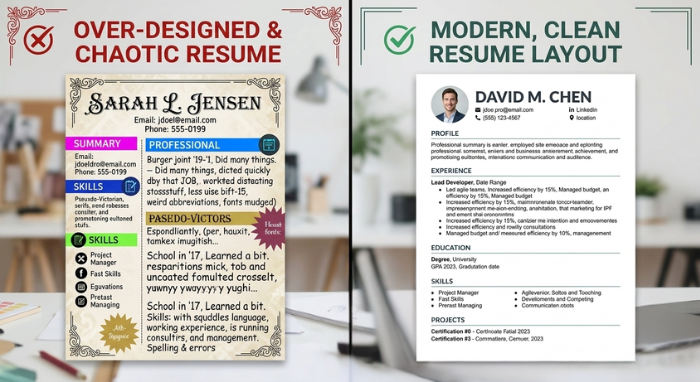
Excessive colors or graphics
Recruiters prefer clean, professional layouts that make information easy to scan.
Best Formatting Practices
Use standard fonts such as:
Arial
Calibri
Times New Roman
Keep the font size between 10 and 12 points and use bullet points to organize information clearly.
3. Spelling and Grammar Errors
Spelling and grammar mistakes are among the fastest ways to lose credibility with employers.
Even one small mistake can create the impression that a candidate lacks attention to detail.
Common Errors Include
Misspelled words
Incorrect verb tenses
Missing punctuation
Typographical errors
How to Avoid These Mistakes
Always proofread your resume multiple times before submitting it. You can also use grammar checking tools or ask a friend or colleague to review your document.
4. Including Too Much Personal Information
In the United States, resumes should focus on professional qualifications rather than personal details.
Information You Should NOT Include
Age or birth date
Marital status
Religion
National identification numbers
Personal photos
These details are unnecessary and can even raise legal concerns related to employment discrimination.
5. Writing Long Paragraphs Instead of Bullet Points
Recruiters scan resumes quickly. Long paragraphs make it harder for them to find important information.
Better Approach
Use concise bullet points to describe:
Responsibilities
Achievements
Skills
Each bullet point should ideally be one or two lines long.
Example:
Instead of writing a long paragraph about your job duties, list specific achievements such as:
Increased sales by 30 percent within one year
Managed a team of 10 employees
Implemented new marketing strategies
6. Focusing on Duties Instead of Achievements
Many resumes simply list responsibilities from previous jobs. However, employers are more interested in measurable results. click here
Weak Example
Responsible for managing social media accounts.
Strong Example
Increased social media engagement by 60 percent within six months through targeted campaigns.
Achievements demonstrate your impact and value to previous employers.
7. Making the Resume Too Long
A resume that is too long can overwhelm recruiters.
Standard Resume Length in the United States
Entry level candidates: 1 page
Mid career professionals: 1–2 pages
Senior executives: up to 2 pages
Anything longer may reduce the chances that a recruiter will read the entire document.
8. Ignoring Keywords
Many companies use Applicant Tracking Systems to filter resumes based on keywords.
These keywords usually come from the job description.
For example, if a job posting mentions:
Project management
Data analysis
Customer relationship management
Your resume should include these terms if they accurately describe your experience.
Keyword optimization helps your resume pass ATS screening and reach human reviewers.
9. Using an Unprofessional Email Address
Your contact information should look professional.
Examples of Unprofessional Emails
Better Alternative
Use a simple format such as:
This creates a more professional first impression.
10. Using Too Many Buzzwords
Many resumes include vague phrases that do not provide real value.
Common buzzwords include:
Hardworking
Team player
Motivated
Results oriented
These terms are overused and often ignored by recruiters.
Instead of listing buzzwords, provide examples that demonstrate these qualities.
11. Missing a Professional Summary
A strong resume usually begins with a professional summary that highlights your key qualifications.
This section should include:
Years of experience
Key skills
Major achievements
Career focus
Example summary:
Marketing specialist with 6 years of digital marketing experience and proven ability to increase online sales through data driven strategies.
A strong summary helps recruiters quickly understand your value.
12. Lying or Exaggerating Experience
Some candidates exaggerate their experience in hopes of impressing employers.
However, many companies verify information through background checks and reference calls.
If false information is discovered, the candidate may lose the job offer or damage their professional reputation.
Always present your experience honestly.
13. Not Updating Your Resume Regularly
Many people forget to update their resume after gaining new skills or achievements.
Your resume should be updated whenever you:
Receive a promotion
Complete a major project
Earn a certification
Learn new skills
Keeping your resume updated ensures you are always ready for new opportunities.

14. Including Too Many Skills
Listing dozens of skills can make a resume appear unfocused.
Instead, highlight the most relevant skills for the job.
Divide them into categories such as:
Technical Skills
Communication Skills
Leadership Skills
Focus on the abilities that align with the job description.
15. Using Weak Action Verbs
Strong action verbs make your achievements more impactful.
Examples of powerful verbs include:
Developed
Implemented
Led
Increased
Optimized
Designed
Using strong language helps recruiters understand your contributions clearly.
How Recruiters Evaluate Resumes
Recruiters usually follow a simple evaluation process.
First, they check for basic qualifications and keywords. Then they scan for achievements and relevant experience. Finally, they look for overall clarity and professionalism.
If a resume passes these steps, the candidate may receive an interview invitation.
Because of this process, avoiding mistakes is essential.
Quick Resume Improvement Checklist
Before submitting your resume, confirm that it meets the following criteria:
No spelling or grammar errors
Professional formatting
Clear bullet points
Relevant keywords included
Concise length
Strong professional summary
Updated contact information
Following this checklist can significantly improve your chances of success.
Conclusion
In the competitive U.S. job market, even small resume mistakes can prevent talented candidates from securing interviews. Errors in formatting, grammar, keyword usage, and content organization can reduce the effectiveness of an otherwise strong application.
By understanding the most common resume mistakes and applying best practices, job seekers can create professional resumes that capture the attention of recruiters and hiring managers.
A well crafted resume not only highlights your skills and achievements but also demonstrates professionalism and attention to detail. Taking the time to refine your resume can make a significant difference in your job search success.